From Idea to Product: The Proven Path to Autonomous Mobile Robots
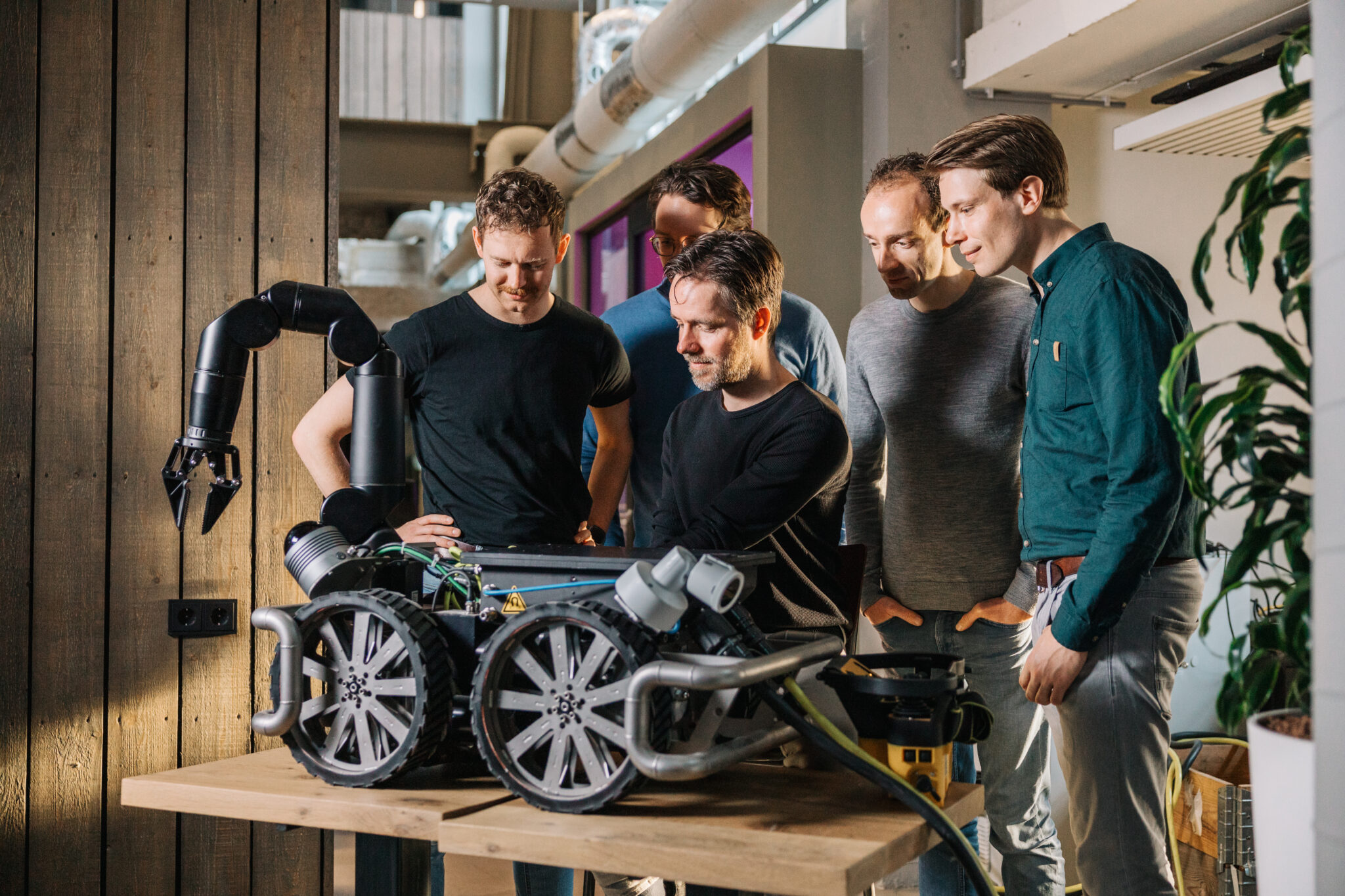
With our autonomous expertise, we specialize in transforming conventional machines into partially or fully autonomous systems. By combining Agile, V-model, and systems engineering best practices into our proven product development process, we enable OEMs to accelerate their time-to-market significantly. Instead of building up new competencies in-house, our clients can start immediately, reducing development cycles and ensuring both a faster market launch and a higher return on investment (ROI).
In this article, we will answer questions that many agricultural OEMs face:
- What does the journey from idea to autonomous product look like?
- How do costs and cost structures evolve?
- What about certification and intellectual property (IP)?
- What assumptions do clients commonly make, and are they really correct?
To make things tangible, we’ll follow a fictional case study: SteepMower, a company that builds remote-controlled lawn mowers designed for steep slopes. SteepMower wants to add full autonomy so operators can focus on higher-value tasks instead of manual control.
Phase 1: Requirements and Scope
Every project begins with clarity. A system architect works with the client to understand the ins and outs of all use cases, and to define what the vehicle must achieve:
- How fast should tasks be completed?
- How accurate should navigation be?
- How much should the device cost?
- Which safety standards and regulations apply?
- What environmental conditions must be considered?
This phase may deliver user stories, a list, detailed specifications, and a test plan that later ensures compliance with those requirements.
SteepMower example: We assessed the vehicles’ use cases directly with end customers, evaluating factors such as slope steepness, grass height, weather conditions, safety standards, docking behaviour , and ROI expectations. This gave us a complete understanding of the mower’s future applications before proceeding.
Common assumption: Many clients assume that their application knowledge is self-evident and underestimate how much implicit application knowledge needs to be shared with the development team. Others overlook details about real-world usage, leading to late-stage setbacks—such as sensors that fail certification. Defining scope early prevents costly surprises.

Phase 2: Concepting
With scope defined, we move to the concept phase. Here, the system architect proposes one or more viable concepts. Together with the client, we make deliberate design choices, balancing feasibility, safety, and cost. Where possible, we leverage proven solutions and existing expertise. Our IP approach in autonomous systems is flexible and tailored to the client’s needs.
During this phase, we also conduct a high-level Hazard and Risk Analysis (HARA). Test setups may be built to evaluate design decisions and reduce risk. The outcome: an initial hardware and software architecture, a conceptual Bill of Materials, and a more accurate cost projection. The initial phase of defining scope, requirements, and concepts can be offered at a fixed price. Subsequent phases are broken into segments, which are priced based on uncertainty; either fixed price, hourly rate, or outsourced to Nobleo’s hardware and UI partners.
SteepMower example: The safety analysis revealed that tall grass posed a major risk, would sensors still function reliably? Several concepts were tested and compared, such as using a drone versus a mast-mounted sensor system. The mast-based design proved more robust and cost-effective.
Common assumption:
- Clients often expect a concept to always include a working prototype. In practice, a concept frequently takes the form of architectural diagrams or partial test objects. This approach allows us to validate ideas early, identify potential design risks, and avoid costly changes later in the development process—ensuring smoother progress toward a final prototype.
- Some might think Nobleo takes over final product certification responsibility. In fact, legal responsibility remains with the selling OEM. Nobleo supports the process by preparing technical risk documentation, liaising with notified bodies, and implementing effective mitigations.
Phase 3: Design and Implementation
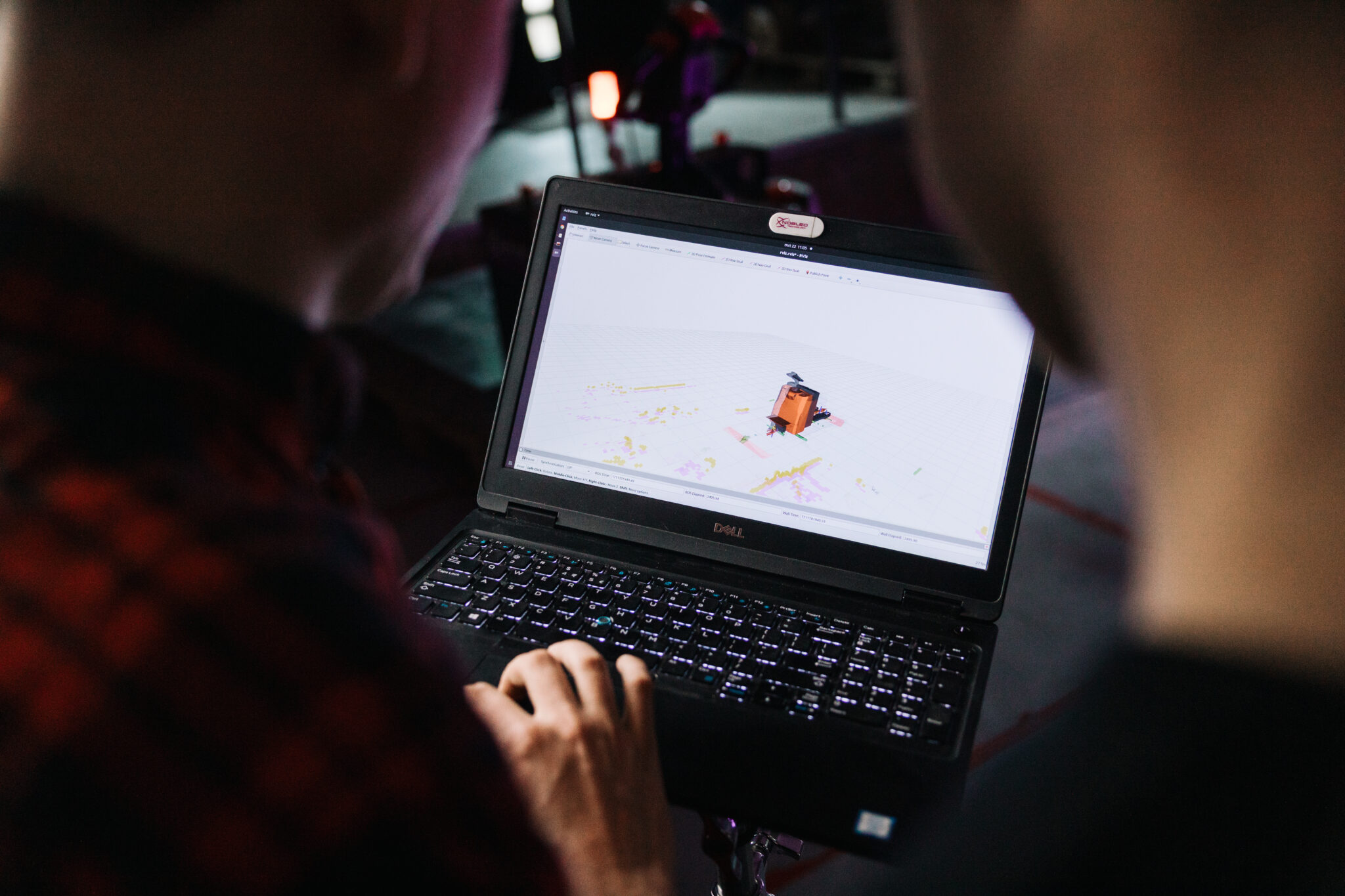
In this phase, the rough sketch becomes a detailed design. The system is broken down into subsystems that can be developed in parallel by specialized teams. Integration points are carefully planned to ensure everything comes together and is tested at the right time. The work is split between hardware and software specialists, often with Agile methods used on the software side. The outcome: a qualified prototype.
SteepMower example: Subsystems identified included orchestration, user interface, navigation and control software and the hardware of the sensor mast chosen during the concepting phase. Mechanical engineers designed the adjustable sensor , while software engineers developed navigation algorithms iteratively.
Common assumption: Hardware can be sourced quickly and software will work right the first time. In practice, hardware lead times are often longer than expected, and software development requires iteration, especially in unexplored technical domains.

Phase 4: Pilot and Volume Transfer
Once the prototype is built, it enters real-world operation. Inevitably, early designs reveal improvement areas. This is where we refine the product for robustness, manufacturability, and cost optimisation. Deliverables include updated hardware, efficient software, user manuals, training materials, and transfer documentation that enables the client (or their partners) to produce, maintain, and scale the product.
SteepMower example: During pilot testing, cold weather caused excessive wear in the sensor mast. We replaced the telescopic design with a simpler lever mechanism that is more durable and failure-proof. On the software side, performance bottlenecks were re-written in a faster language, and custom PCBs were designed for optimized I/O.
Common assumption: Nobleo provides long-term operational support after series production. In reality, each project concludes with a structured handover in the form of documentation, training, and guidance—empowering the client to operate the product independently. Nobleo remains available in a standby role and can step in for new challenges, creating additional ROI in future projects.
Conclusion
As you can see, there is no “one-size-fits-all” roadmap to autonomy. But Nobleo’s proven methodology ensures , transparency, clarity, and quality —helping clients accelerate time-to-market and achieve higher ROI. Too often, we see clients partner with providers who underestimate the complexity of autonomy—leading to failed expectations.
Our goal is to be honest and transparent from the start. Want proof? Explore our work with AgXeed, where we helped develop a fully autonomous tractor.