

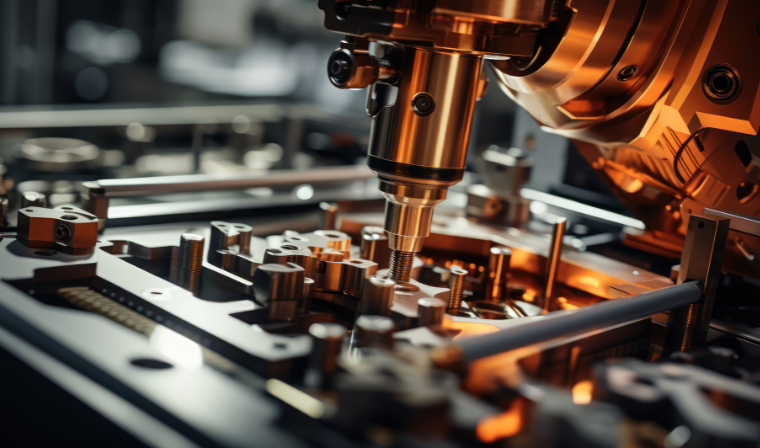
It is in the field of precision engineering where we combine our expertise in mechanical design, metrology and control systems. The result: systems that operate at or beyond the limits of achievable accuracy. Whether in positioning, alignment or thermal management, this is where craftsmanship becomes visible at the micron and nano scale.
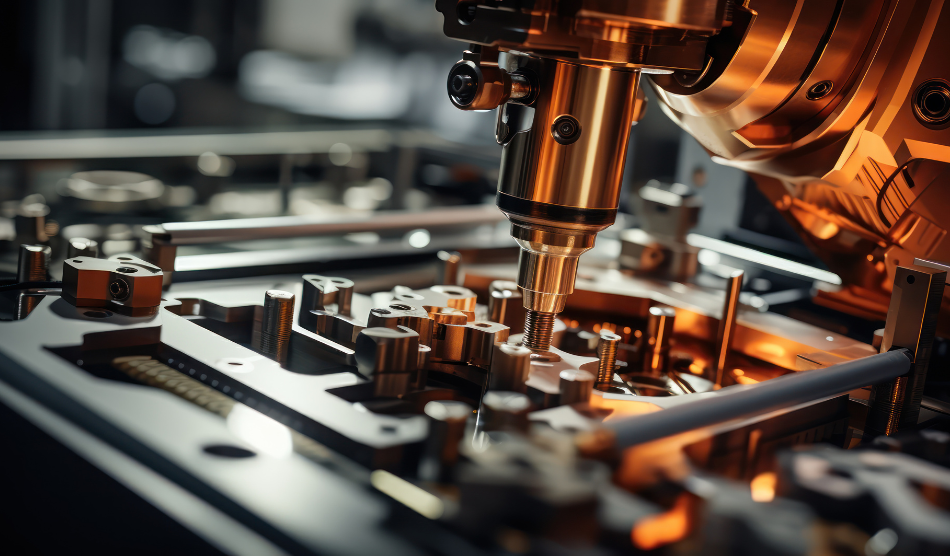
High-precision systems, built from fundamental understanding
Industrial-grade precision with accuracies beyond one micrometer demands a design approach that balances stiffness, manufacturability, dynamic behaviour, and thermomechanical stability.
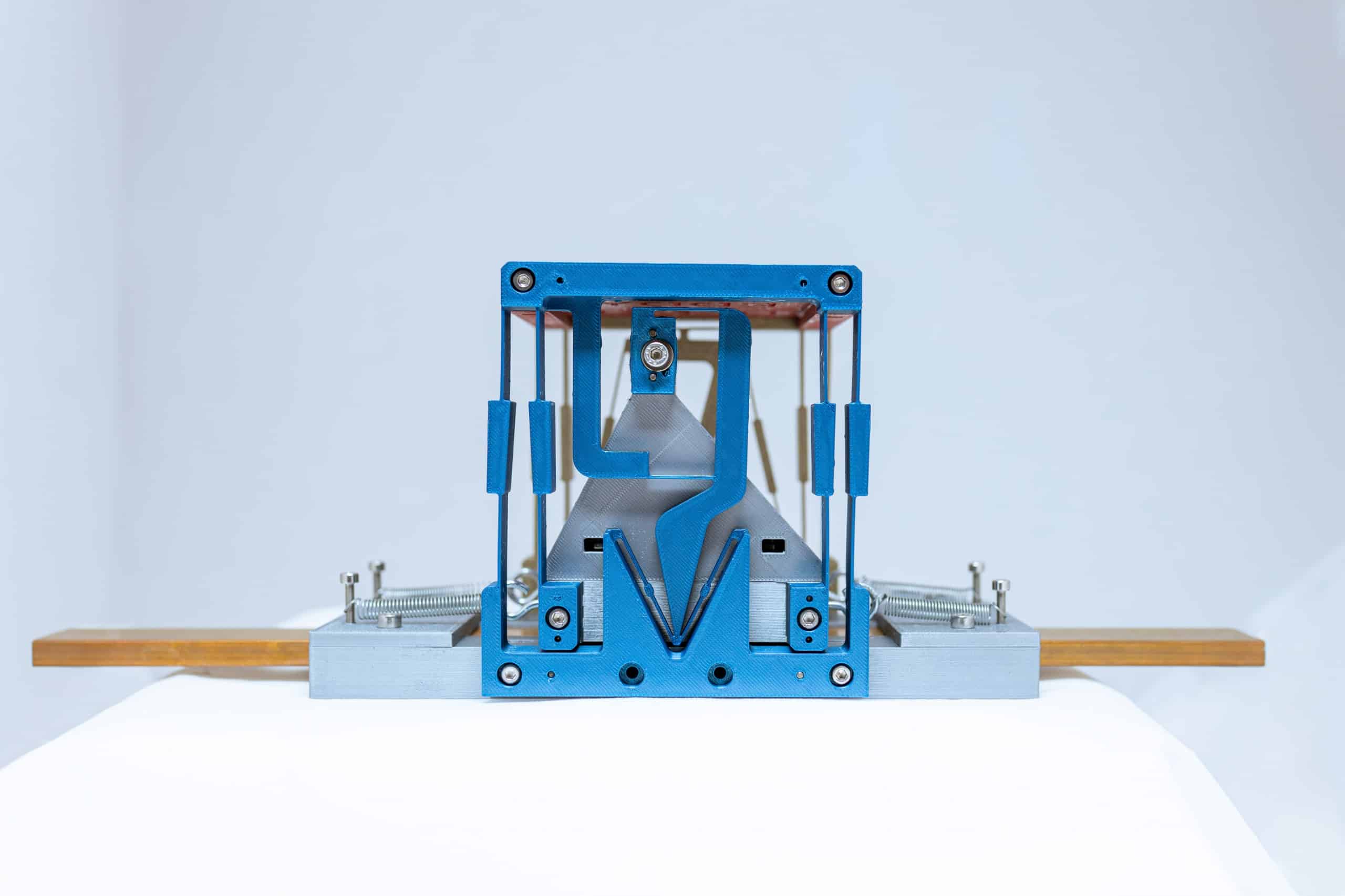
Our structured approach to precision engineering and design begins with a thorough understanding of the technical challenge, system requirements, and boundary conditions. From there, we explore the full range of design options. Mechanical layouts are developed along the principles of Wim van der Hoek and the Dutch School of Precision Design—light, stiff, and symmetric.
Precision performance beyond the mechanical domain is achieved through the integration of metrology concepts, careful sensor selection or development, and advanced digital control strategies. Simulations are used to predict system performance, followed by verification through measurement after assembly. This results in robust, verifiable designs that meet strict accuracy and stability criteria.
Our capabilities within precision engineering
Precision design
Mechanism design based on Dutch School principles: light, stiff and symmetric.
Metrology integration
From conceptual metrology design to sensor selection and calibration strategies.
Thermomechanical engineering
Focused on minimizing thermal drift and distortion in system operation.
Dynamic behaviour analysis
Modelling of resonance, damping, and mode shapes to ensure stable operation.
Control Co-design
Integrated development of physical design and digital control architecture.
Assets

Nobleo Design Core
Within Nobleo the multidisciplinary design typical for mechatronics, is supported by our in house developed software tool chain in combination with our hands-on attitude. Enabling our engineers of different competence backgrounds to collaborate easy and efficiently on design and analyses , backed-up with fast experimental validation. All together ensuring convergence on optimal design solutions.

Design House+
We are not only providing our customers a design with corresponding Technical Product Documentation (TPD). We support our customers from end-to-end.
Being more than only a design house, we fulfil this support by setting up a tailored supply chain at jointly selected volume suppliers, handle NPI supervision and support on behalf of our customer. In the end wrapped up with turnkey industrialization and in-place Life Cycle Management (LCM).
All of the above in close cooperation with and full transparency towards our customer, safeguarding Nobleo’s full independence of potentially selected suppliers to serve our customers with the best tailored supply chain solution.
Industries er support with our precision engineering expertise
- Semiconductors
- Industrial Systems & Automation
- Mobility
Examples of applications of our precision engineering knowledge
- Backend die pick-and-place units for semiconductor packaging
- Ultra-stable alignment modules in photonics assembly
- Submicron scanning stages for inspection and metrology
Read about our latest projects, news and articles
For more information about our work in precision engineering, please contact us directly. Due to NDAs, many of our projects cannot be publicly shared or showcased.




Get in touch
"*" indicates required fields
Can I help you?

Ruud van der Aalst
Business unit director Mechatronic Systems
Trusted by industry leaders




Frequently Asked Questions
When should precision engineering be considered?
Precision engineering expertise can provide value during new product development as well as when improving existing systems. Precision engineering becomes essential when product performance depends on extremely accurate positioning, alignment, stability or repeatability. Involving precision engineering early helps identify performance risks before detailed design begins, reducing the likelihood of costly redesigns, schedule delays and unexpected system limitations later in development.
What are the key challenges in designing high-precision systems?
Achieving high precision requires more than accurate mechanical components. System performance is influenced by the interaction between mechanics, thermal effects, metrology and control systems. Successfully balancing these disciplines requires a multidisciplinary approach that considers stiffness, dynamic behaviour, manufacturability and thermomechanical stability at system level. This helps ensure predictable and reliable performance under real operating conditions.
How does Nobleo Technology achieve submicron or nanometer-level accuracy?
Achieving ultra-high accuracy starts with a thorough understanding of the technical challenge, system requirements and operating conditions. We combine precision mechanical design, metrology, advanced control strategies and system simulations to understand and manage factors such as thermal effects, structural dynamics and measurement uncertainty. Performance is predicted during the design phase and verified through measurement after assembly. This approach enables robust system designs and provides objective evidence that demanding accuracy requirements can be achieved.
Why is it important to balance stiffness, thermal stability and dynamic performance in precision engineering?
In high-precision systems, stiffness, thermal stability and dynamic performance directly influence accuracy and repeatability. Optimising one factor without considering the others can introduce new performance limitations elsewhere in the system. By considering these factors together, we can make informed design choices that support stable, predictable performance while also taking manufacturability and operating conditions into account.
Can precision engineering improve existing systems as well as new designs?
Yes. Precision engineering supports both the development of new systems and the optimization or redesign of existing equipment. Whether the objective is to increase positioning accuracy, reduce thermal drift, improve dynamic behaviour, enhance manufacturability, or reduce cost, we analyse the complete system to identify the factors that limit performance. This enables targeted improvements that deliver measurable gains in accuracy, stability, reliability or efficiency.
How does Nobleo Technology verify that a precision engineering design will perform as intended?
Performance is first predicted using simulations during the design phase, allowing potential risks and limitations to be identified before hardware is built. After assembly, the system is verified through measurement and testing to confirm that it meets the required accuracy, stability and repeatability targets. Combining model-based predictions with experimental validation provides objective evidence that the system performs as intended under real operating conditions.