

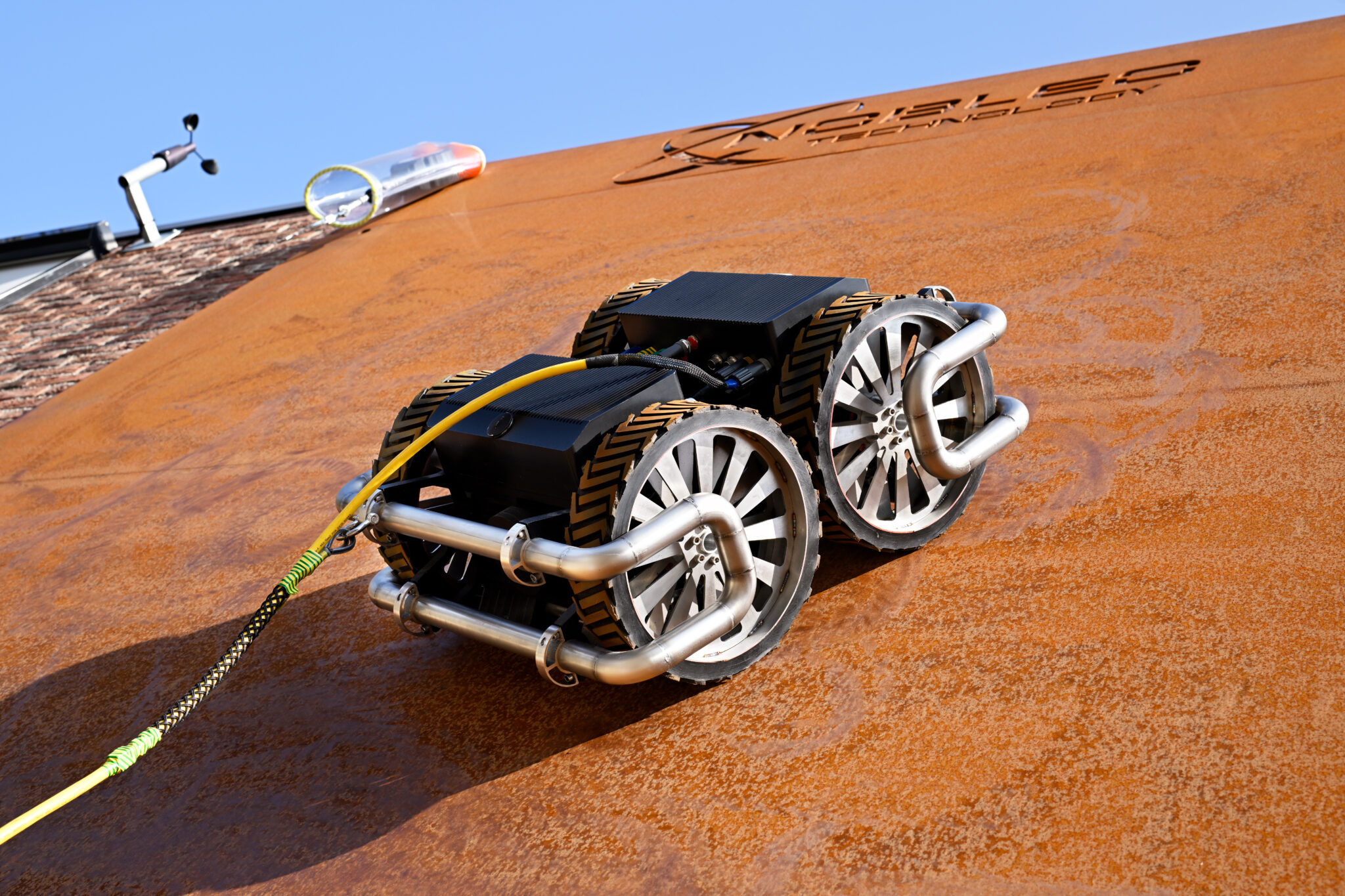
The Nobleo Autonomy Core (NAC) combines our autonomy algorithms, software architecture, reusable modules and deployment tooling into one integrated solution. It provides a proven technical foundation that is configured and extended for your machine, application and operational environment. By building on reusable, high-quality components instead of starting from scratch, NAC helps accelerate development, improve software quality and reduce technical risk, without forcing your product into a rigid, off-the-shelf solution or creating unnecessary supplier lock-in.
Complete autonomy development in one integrated package
Developing an autonomous machine requires more than a navigation algorithm. Perception, localisation, behaviour, software architecture, hardware interfaces, diagnostics, deployment and operational support must work together as one coherent system. NAC brings these capabilities together through a modular autonomy architecture and a consistent engineering approach. Proven modules and development tools provide a reliable starting point, while customer-specific functionality can be added where it creates genuine application value. This gives customers the flexibility of custom engineering with the efficiency and robustness of a reusable autonomy platform.
Proven building blocks, tailored to your application
NAC is not a fixed, one-size-fits-all product. It is a platform where we combine your industry specific requirements, our experience and prebuilt packages into one capable, effective foundation.
Its modular architecture allows Nobleo to select, modify andconfigure for each application. Customer-specific processes remain central, while proven autonomy functionality is built using proven software modules and established engineering methods.
Accelerating development without compromising flexibility
Starting every autonomous system from an empty codebase creates avoidable development effort and integration risk. At the other extreme, a closed off-the-shelf product can limit flexibility and make customers dependent on a single supplier. NAC provides a balanced alternative: a high-quality reusable software foundation combined with application-specific engineering. This allows development teams to focus their effort on the functionality that differentiates the customer’s machine, rather than repeatedly rebuilding common autonomy capabilities.
Working with NAC helps customers:
- Reduce time-to-market by starting from reusable autonomy components and development tooling.
- Lower technical risk through an established architecture, defined interfaces and proven engineering practices.
- Improve robustness by avoiding unnecessary reinvention of common software functionality.
- Retain flexibility through a modular architecture that can be adapted to different machines, sensors and applications.
- Avoid unnecessary lock-in by using maintainable software structures and widely adopted technologies such as ROS 2, C++ and Python.
- Scale more effectively from initial development and simulation to hardware integration, deployment and fleet operation.
Our core NAC capabilities
Autonomy algorithms
Localisation, mapping, navigation, perception and context-aware behaviour enable machines to understand their surroundings, make decisions and move safely through complex indoor and outdoor environments.
Architecture and reusable software
Clear system boundaries, responsibilities, interfaces and data flows provide a maintainable foundation for complex autonomous systems. Reusable ROS 2 components, libraries and development tools reduce integration risk and support efficient development.
Hardware integration
A dedicated hardware interface layer connects the autonomy software to sensors, motors, actuators and safety systems. This allows NAC to be adapted to different machine platforms and computing environments.
Diagnostics and system state management
Integrated diagnostics, logging, health monitoring and state management provide visibility into system behaviour and support reliable operation, testing and technical support.
Cloud, fleet and user interfaces
NAC can connect autonomous machines to end-user interfaces, cloud databases, diagnostics environments and ERP or fleet-management systems, depending on the operational requirements.
Deployment and lifecycle support
Containerised deployment, CI/CD pipelines, hardware-specific configurations and scalable update mechanisms help move autonomy software from development into stable real-world operation, from a single prototype to a deployed fleet.
From first concept to reliable operation
The Nobleo Autonomy Core supports the complete autonomy development journey:
- System architecture: defining requirements, interfaces, responsibilities and system boundaries
- Configuration: selecting the appropriate NAC modules, sensors and computing platform
- Application development: implementing customer-specific behaviour and process functionality
- Simulation and validation: testing software and system behaviour before and during hardware integration
- Machine integration: connecting sensors, actuators, safety systems and external interfaces
- Deployment: configuring reliable, repeatable software releases for the target hardware
- Operational support: enabling diagnostics, system updates and further optimisation in the field
Applicable across autonomous machines and industries
The modular nature of NAC makes it suitable for autonomous mobile robots, vehicles, machinery and inspection platforms across industries including:
- Agri & Food
- Industrial systems and automation
- Logistics
- Energy
- Maritime and offshore
- Forestry
- Mobility
- Humanoid robotics
Build on a proven autonomy foundation
Whether you are adding autonomous functionality to an existing machine or developing a new robotic platform, NAC provides a structured route from concept to deployment. You retain the flexibility to differentiate your product, while benefiting from Nobleo’s reusable technology, multidisciplinary autonomy expertise and experience with real-world system integration.
Bring your autonomous system to market faster with less reinvention, lower technical risk and a foundation designed to evolve with your product.
Want to know what NAC could mean for your machine? Get in touch with our autonomy experts.


Get in touch
"*" indicates required fields
Can I help you?

Trusted by industry leaders