Integrating air, ground and intelligence: towards fully autonomous wind turbine inspection | AirTub project part 3
Autonomous technology is rapidly transforming how offshore wind turbines are inspected and maintained. Within the AIRTuB project (Automatic Inspection & Repair of Turbine Blades), coordinated by World Class Maintenance, Nobleo contributes to this development by integrating aerial robotics, crawling mechanisms, and intelligent software for full autonomy in drone-based inspection for offshore platforms.
From flight to traction: building an integrated system
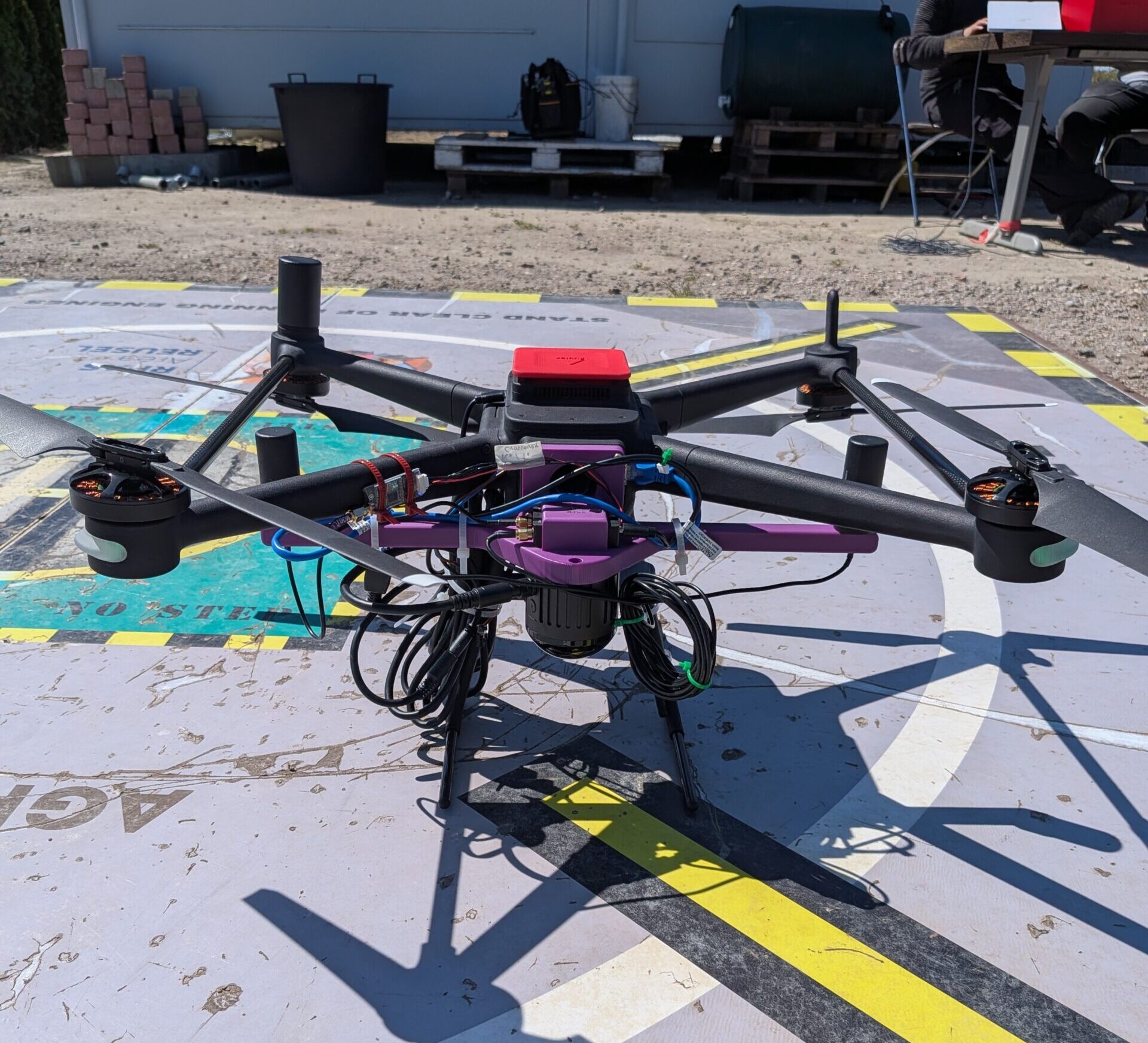
Following the autonomous flight test in June 2025 and the crawler driving test in July 2025, the next step in AIRTuB is clear — bringing air and ground capabilities together. The aim is to enable a system where a drone can fly to a blade, detect its position, land safely, and continue inspection by driving across its surface.
This hybrid approach allows access to areas that are currently difficult or risky for human technicians, while ensuring high-resolution inspection data for early defect detection.
Integrating autonomy: localisation, navigation and sensor fusion
Nobleo’s core contribution lies in the autonomy software that connects all subsystems. By merging data from GNSS, IMU and lidar sensors, the system can accurately localise itself relative to the blade and execute both aerial and surface navigation.
The resulting sensor fusion framework enables the drone-crawler combination to plan safe paths, adapt to environmental conditions, and maintain precise positioning — key ingredients for a robust autonomous inspection solution.
Collaboration and testing within AirTub
The AIRTuB consortium combines the expertise of NLR, Terra Inspectioneering, Nobleo, Avular and other partners, each contributing critical technologies in sensing, mechanics, and control. The tests performed so far validated the fundamental building blocks for a fully autonomous inspection cycle, with more integrated trials scheduled in the next project phase.

Impact on offshore energy operations
Autonomous inspection reduces the need for manual offshore work, cuts downtime, and enhances the safety and efficiency of wind energy maintenance. For the growing offshore wind sector, drone-based inspection for offshore platforms and technologies like AIRTuB represent a significant step towards sustainable, data-driven asset management.
Conclusion
With its multidisciplinary expertise in mechatronics, embedded autonomy, and robotics, Nobleo plays a key role in advancing the automation of offshore wind maintenance. The integration of drone, crawler, and intelligent software systems demonstrates what’s possible when engineering meets autonomy.
📖 Missed the earlier story? Read part 2 here: Autonomous crawler testing for wind turbine blade inspection | part 2
Contact us, for more information about our autonomous expertise and the solutions & services we offer.